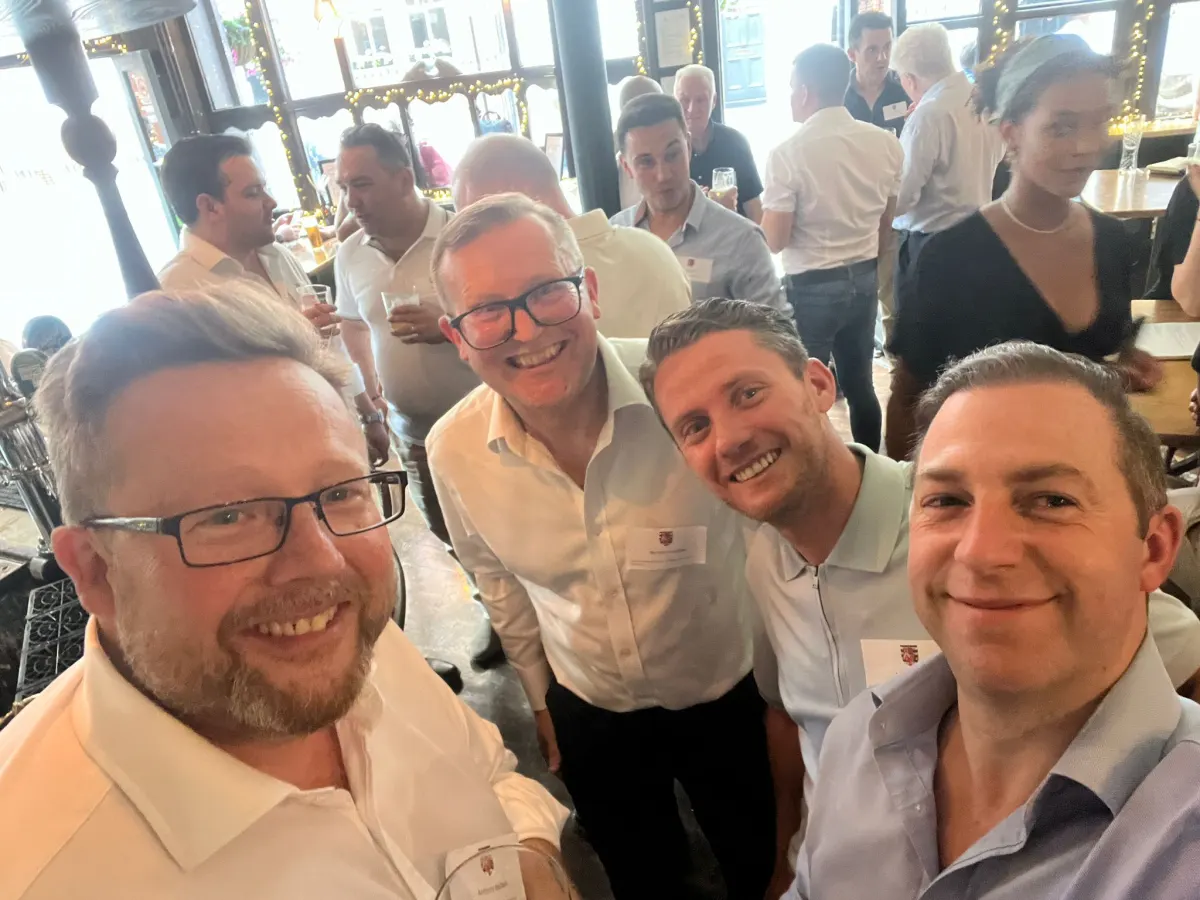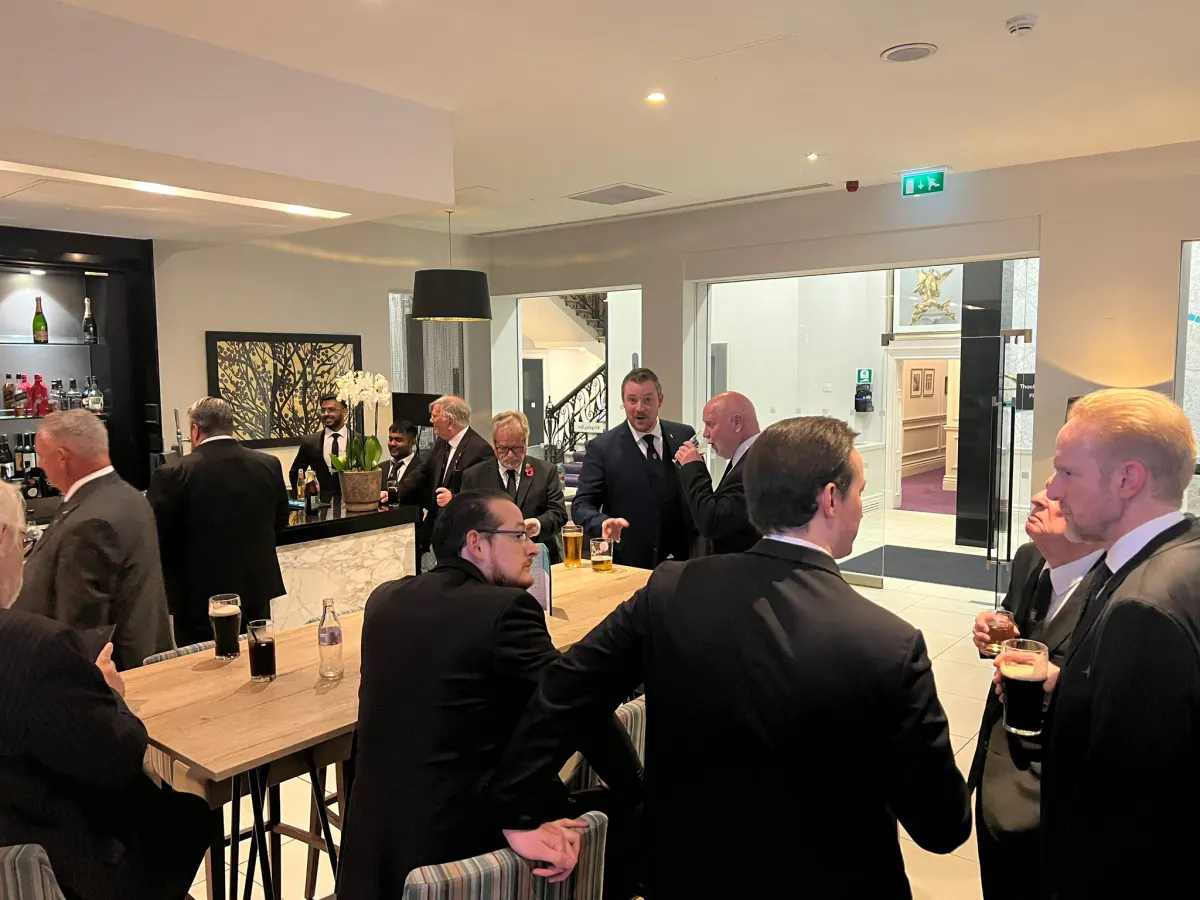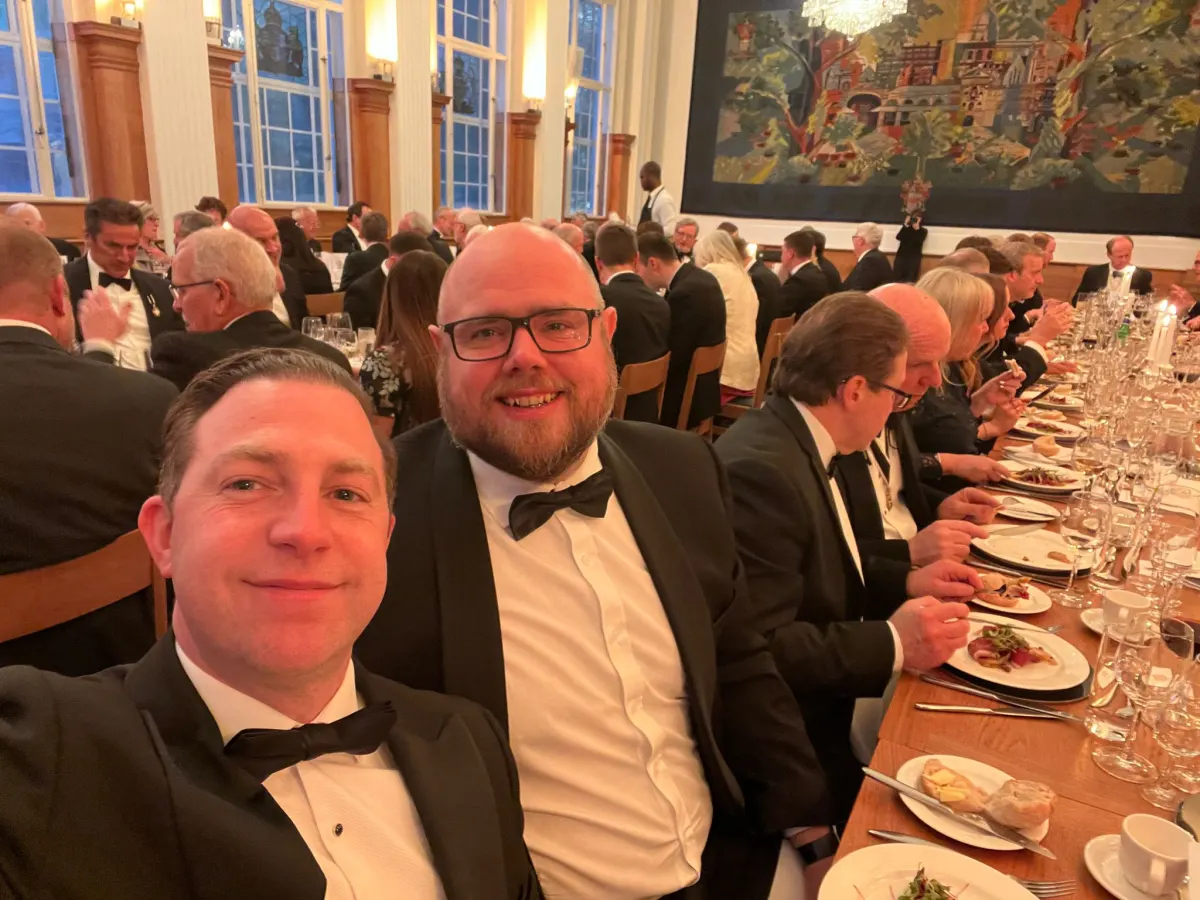
Freemasonry attracts more myths than almost any other organisation in Britain — many of them decades or centuries old, and almost none of them true. Because Lodge life has traditionally been kept private rather than publicised, the space left by that quiet has often been filled with speculation, half-remembered history, and, in a few cases, conspiracy theories that were harmful even in their own time. Royal Arthur Lodge, in keeping with the wider approach taken by the United Grand Lodge of England since the 1990s, would rather answer these questions directly than leave them unaddressed. What follows is nineteen of the misconceptions we hear most often, in roughly the order a curious newcomer tends to ask them — stated plainly, and answered just as plainly.
What Freemasonry Actually Is
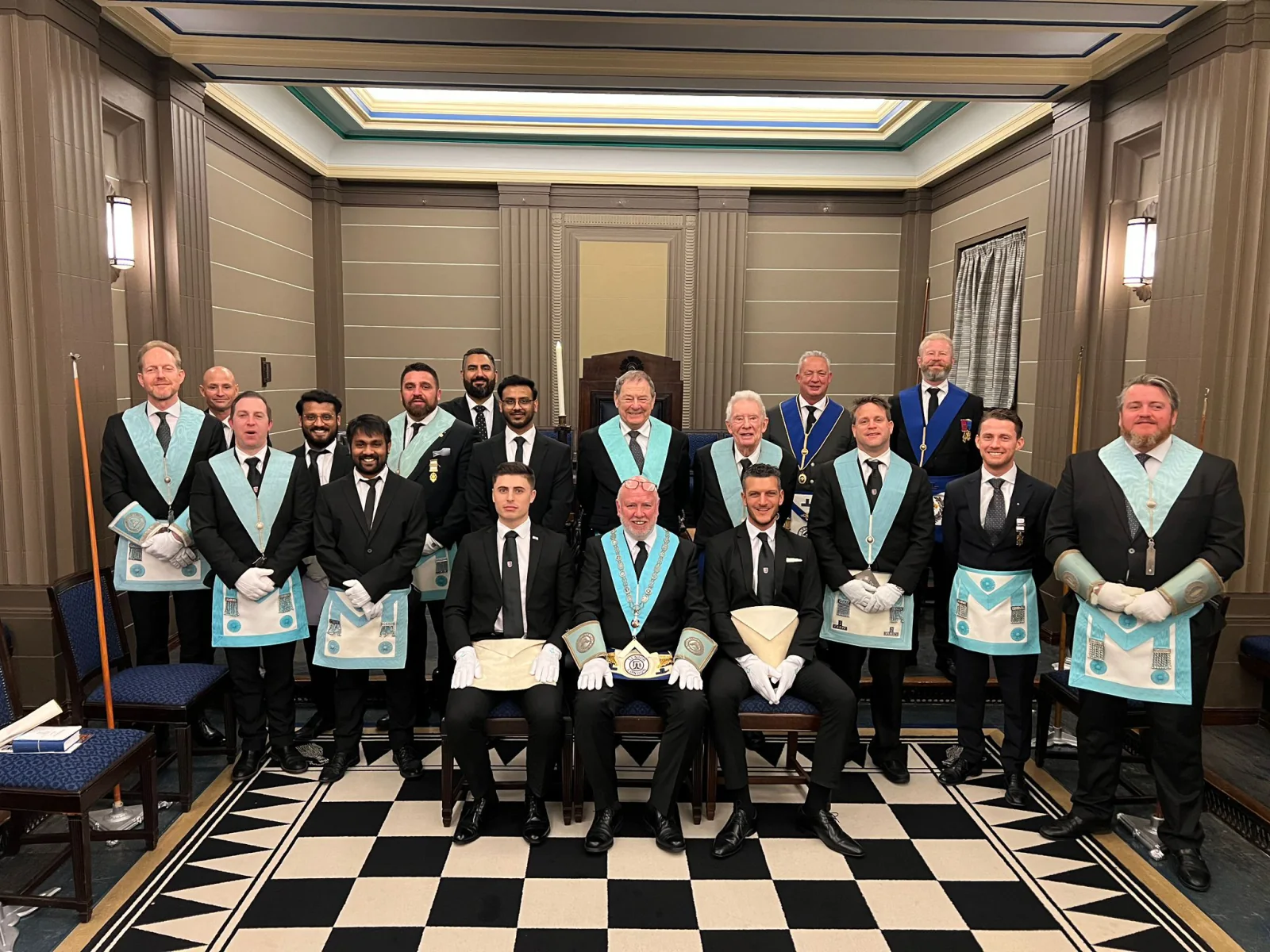
Freemasonry is a secret society. It isn't, and the distinction matters. Freemasonry is a private society, not a secret one — much as a golf club, a livery company, or a professional membership body conducts its own business privately without being "secret." Its existence, its membership, its charitable giving, and its lodge buildings are all public. Since the mid-1990s, the United Grand Lodge of England has actively opened itself to public scrutiny: publishing membership figures and charitable accounts, engaging with journalists, and welcoming visitors into lodge buildings, including Freemasons' Hall in London itself. What remains private is a small number of ceremonial recognition signs used within the Lodge room — no different in principle from the traditions many private clubs, livery companies, and fraternities keep to themselves without anyone calling them secretive.
Freemasonry is a religion. It requires a belief in a Supreme Being but does not define, prescribe, or replace any particular faith. Members are practising Christians, Muslims, Jews, Hindus, Sikhs, and more, worshipping in their own churches, mosques, synagogues, and temples exactly as they always have. Freemasonry has no clergy, no scripture of its own, no path to salvation to offer, and no theology beyond a shared belief in a higher power — that is left entirely to each member's own faith, chaplain, and place of worship.
Freemasonry is a cult. The two have almost nothing in common once you compare them point by point. Freemasonry has no single charismatic leader whose authority goes unquestioned — lodge leadership positions, including the Worshipful Master, are elected annually and rotate between members. It does not isolate members from family, friends, or their existing religion; if anything, members are expected to remain fully engaged with all three, and a candidate's family is often invited to social events from an early stage. There is no financial exploitation beyond modest subscriptions that cover running costs, dining, and charitable giving, and any member is free to leave at any time, for any reason, without consequence — a point worth returning to later in this article, since it comes up so often on its own.
Belief and Belonging
Atheists can join Freemasonry, as long as they keep quiet about it. Under the United Grand Lodge of England, a professed belief in a Supreme Being is a genuine requirement of membership — it isn't hidden, and it isn't negotiable, so this particular claim gets the emphasis backwards. It is, however, entirely unconnected to any specific religion, which is why Freemasonry sits comfortably alongside Christianity, Islam, Judaism, and many other faiths at once, each candidate affirming the belief in the terms of their own tradition. Some other Masonic bodies elsewhere in the world, such as the Grand Orient de France, have removed this requirement entirely, which is a genuine and long-standing difference between Masonic traditions internationally — worth stating accurately rather than glossing over, since it's one of the few places the myths and the facts point in almost opposite directions.
Freemasonry is only for men. Royal Arthur Lodge, like all lodges under the United Grand Lodge of England, is a male membership organisation — but Freemasonry as a whole is not exclusively for men. Two recognised Grand Lodges for women operate in England, the Order of Women Freemasons and the Honourable Fraternity of Ancient Freemasons, each with their own lodges, officers, ceremonies, and charitable work, entirely separate from UGLE but built on the same core principles.
You have to be wealthy, well-connected, or "somebody" to join. Subscriptions cover a lodge's basic running costs, its dining, and its charitable giving; they are set at a level intended to be reasonable, not to act as a barrier reserved for the wealthy. Royal Arthur Lodge's own membership, like most lodges, spans a wide range of professions, ages, and incomes, and always has, going back to a village lodge in Victorian Wimbledon in 1871. The common thread among members is character and shared values, not net worth or social standing.
You need to know a Freemason personally, or be invited, before you can join. Word of mouth remains a common route in, simply because most people first hear about Freemasonry from a friend, relative, or colleague who is already a member — but no personal connection is required, and it never has been a formal requirement. Anyone can make direct contact with a lodge, including through the Join Us page of this website, and will be guided through an enquiry, an informal introduction, and the application process from there.
Power, Money, and Influence
Freemasons secretly run governments, banks, and a "New World Order." This is among the oldest and most persistent Masonic conspiracy theories, tracing back to 18th-century writers who wrongly blamed Freemasonry (and a supposedly surviving Bavarian Illuminati) for the French Revolution, and revived in various forms in every generation since. Freemasonry's own rules make the theory structurally implausible: lodges are explicitly forbidden from discussing party politics or taking collective political positions, and there is no central command capable of directing members toward any shared political or financial goal. Mainstream historians treat "New World Order" claims as speculation without a factual basis, and it's worth noting plainly that versions of this theory have historically overlapped with, and drawn language from, antisemitic forgeries such as the Protocols of the Elders of Zion — one of the reasons serious historical and Masonic bodies alike are firm in rejecting it outright, rather than treating it as harmless folklore.
Freemasonry is connected to the Illuminati. The Bavarian Illuminati was a distinct, short-lived 18th-century group, founded in 1776 and suppressed by the Bavarian government in 1785. There is no credible historical evidence that it survived its suppression, let alone merged with or infiltrated Freemasonry — a claim invented decades later and popularised further still by 20th-century conspiracy fiction. The two organisations are separated by both time and origin; the connection between them exists only in that fiction, not in any historical record.
Members give each other unfair business favours or jobs. Using membership to seek personal, business, or political advantage runs directly against Masonic principle, and Grand Lodge guidance is explicit that such conduct is inappropriate and unwelcome. As in any club, congregation, or association of people who see each other regularly, genuine friendships naturally form between members over years of acquaintance — but no lodge exists to broker favours, no one is obligated to do business with a fellow member, and doing so is not tolerated as a purpose of membership.
Freemasonry is just an old boys' network for the establishment. Historically, Masonic membership in some periods and locations did draw disproportionately from certain professions and social classes, and Masonic history is generally honest about that rather than hiding it. Today's membership, including at Royal Arthur Lodge, reflects a far broader cross-section of modern London, drawn together by shared values and personal interest rather than shared background, school, or profession.
Ritual and Belief
Freemasons worship the devil or practise Satanism. This particular myth has a documented, traceable origin: the French writer Léo Taxil fabricated lurid stories of Masonic devil-worship throughout the 1890s, building an entire fictional mythology around it, before publicly admitting in 1897 that the whole episode had been an elaborate hoax staged for his own amusement. Despite that public confession, the claims outlived him and still circulate in various forms today. Freemasonry's actual teaching centres on belief in a Supreme Being — often referred to within the Lodge as the Great Architect of the Universe — and on moral, charitable conduct: very nearly the direct opposite of what continues to be alleged.
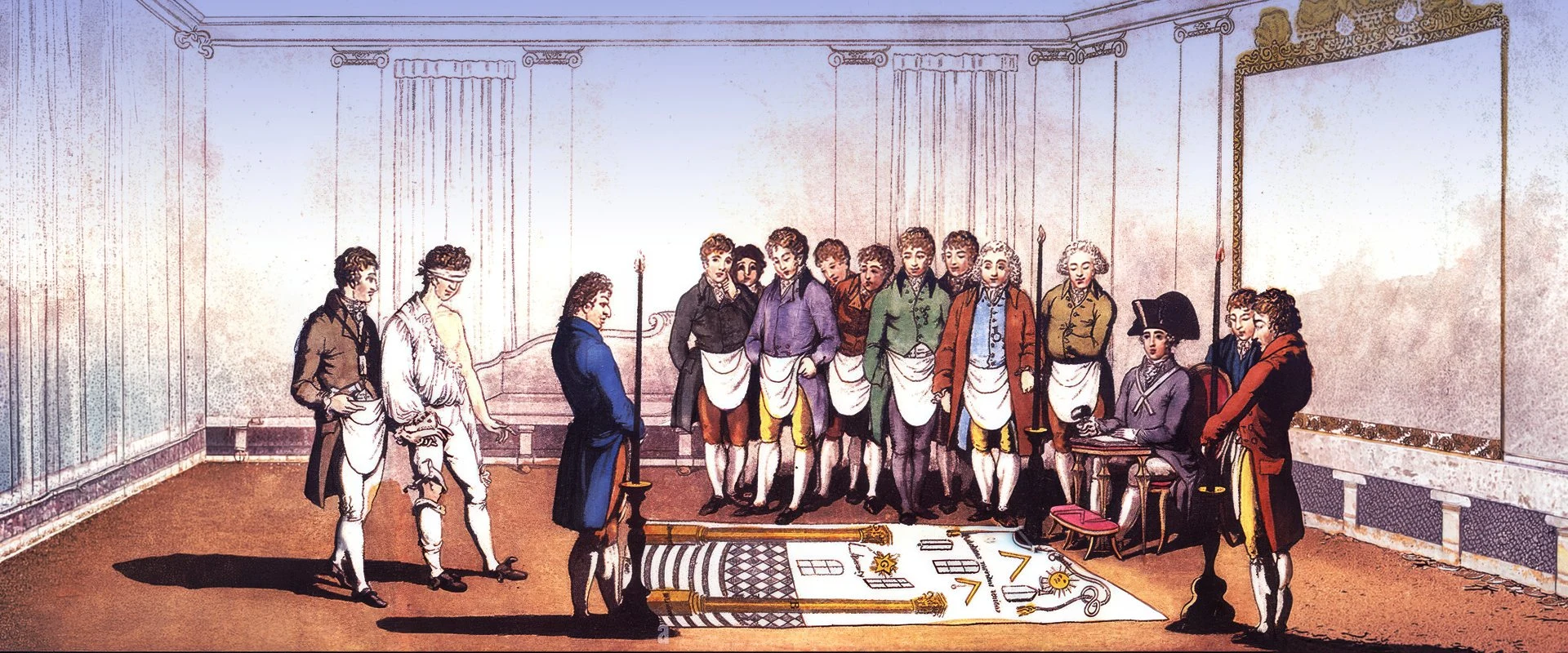
Masonic initiation ceremonies are dangerous, humiliating, or risky. Masonic ceremonies are entirely symbolic and have been practised, largely unchanged, for centuries across hundreds of thousands of candidates without physical harm. Nothing in them is dangerous, and nothing in them is designed to humiliate. As with many long-standing institutions — university degree ceremonies, religious rites of passage, and military or professional traditions among them — the specific words and actions used are kept for members rather than published in full, but their broad nature is well understood and entirely unremarkable to anyone who has looked into it honestly.
Secret handshakes let Masons secretly identify and favour one another. Masonic modes of recognition do exist, in much the same way as many fraternities, guilds, livery companies, and private societies maintain their own traditions of recognition among members. Their purpose is to confirm shared membership in a lodge room, nothing more — not to arrange favours, which, as covered above, runs directly against Masonic principle and Grand Lodge guidance.
Membership Today
Once you join Freemasonry, you can never leave. Membership is entirely voluntary, from the first enquiry to the last. Any member is free to resign at any time, for any reason, simply by informing their lodge Secretary in writing — there is no ceremony required to leave, no permission needed, and no consequence for doing so. Many long-standing members also step back for a period around work, health, or family commitments and return later when life allows; lodges are generally glad to welcome them back.
Freemasonry is dying out and no longer relevant. UK Freemasonry's membership did decline from its mid-20th-century peak, in line with almost every UK membership organisation and social club over the same fifty-year period — working men's clubs, trade unions, church congregations, and community associations all saw similar patterns, and Freemasonry is far from unique in that respect. Recent years have seen renewed interest in fraternal and community organisations more broadly, and Royal Arthur Lodge, founded in 1871, continues to welcome new members today, more than 150 years after its consecration.
All Freemasons belong to one single worldwide organisation, taking direction from the top. There is no single global Masonic authority, and there never has been. Freemasonry is organised into numerous entirely independent Grand Lodges by country or region — the United Grand Lodge of England, of which Royal Arthur Lodge is part, governs lodges only in England and Wales (and a small number abroad), and recognises, or chooses not to recognise, other Grand Lodges through bilateral relationships known as "amity," not through any command structure. A Freemason in London and a Freemason on the other side of the world are not part of the same chain of command at all — in most cases, they've simply never met.
Freemasons aren't allowed to tell anyone they're a member. There's no rule of anonymity, and most members are entirely open about it — plenty list it on their own biographies, wear a lapel pin, or simply mention it in conversation. What stays private is a small number of ceremonial details experienced inside the Lodge room, not the fact of membership itself, which is exactly why a website like this one can exist at all.
The public can never see inside a Masonic building. Freemasons' Hall in London, the headquarters of the United Grand Lodge of England and the spiritual home of lodges like Royal Arthur, offers public tours of its Grand Temple and other rooms throughout the year. Many Masonic halls across the country, including smaller local buildings, also host community groups, charity events, and private hires open to non-members — Masonic buildings are working community venues, not vaults.
If you've heard something about Freemasonry that doesn't match what's written here, the most reliable next step is simply to ask a member — Royal Arthur Lodge welcomes the question.